
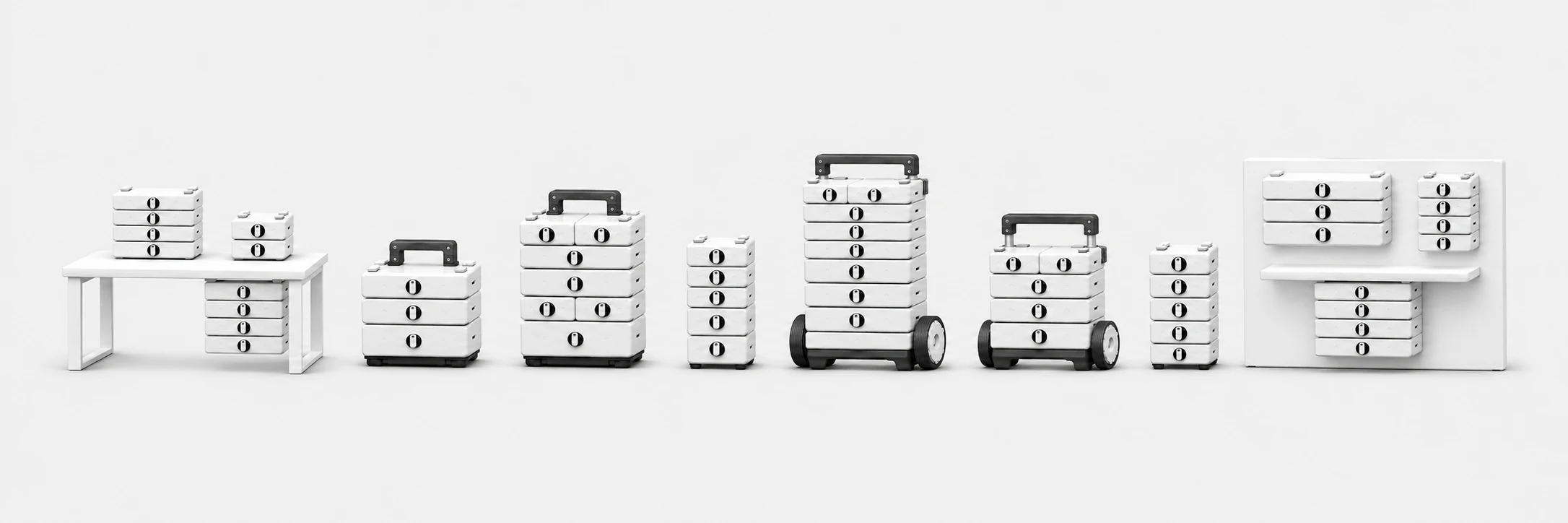
Same modules. Endless possibilities.
Rearrange what you have. Add what you need.
Snap Grid is designed around reuse and flexibility. As your needs change, rearrange your existing drawers and sustainers or add compatible modules. Keeping useful pieces in service instead of replacing a whole organiser can help reduce unnecessary material use and waste.
Start with a Small family configuration and build from there. Your Small drawer can sit beside a Medium drawer above an XL base, with matching depths. Different drawer configurations let you organise new tools, parts or supplies without retiring the storage you already have.
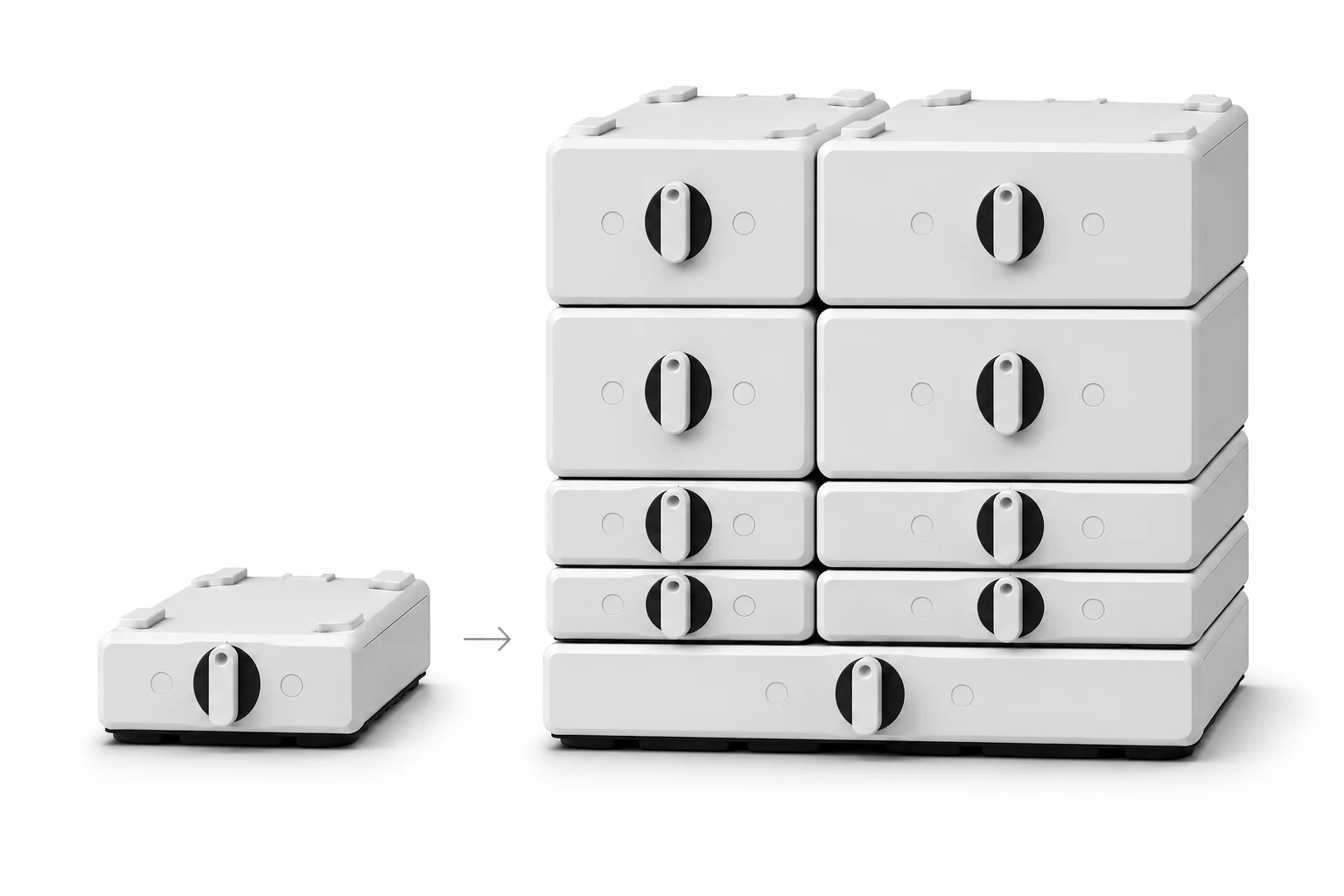
Plan before you print.
Measure your space and the items you want to store, then use the model explorer to choose suitable sizes and the stack builder to check your layout.
Test one module before committing to a larger build. Review part orientation, supports and printer fit in your slicer.
Choose your filament with care.
Select a filament suited to your printer and intended use, including recycled-content options where suitable. Check the supplier’s specifications for strength and heat resistance.
A suitable print profile and a calibrated printer can reduce avoidable failed prints. Our Printing and care guide covers preparing for a build.
Recycle with care.
When a printed part reaches the end of its useful life, check local disposal and specialist recycling options. Printed plastic, including PLA, is not automatically accepted in household recycling or suitable for composting. Follow the guidance for your material and the facilities available in your area.
FAQs: 3D Printing Environmental Impact
Is 3D printing environmentally friendly?
It depends on the material, electricity used, print settings and how long the finished part stays useful. Printing only what you need, avoiding failed prints and reusing existing Snap Grid modules can help limit unnecessary resource use. 3D printing is not automatically a lower-impact choice in every situation.
Are 3D printing materials good for the environment?
No filament is impact-free. Consider its production, suitability for the job, durability and disposal options. Recycled-content filament may be suitable for your setup; check the supplier’s specifications. Choosing a material that performs well and keeps a module useful can help avoid premature replacements.
Why is PLA environmentally friendly?
PLA is commonly made from renewable feedstocks, which can reduce reliance on fossil raw materials. That does not make every PLA product environmentally friendly or suitable for home composting. Compostability depends on the finished product and specific processing conditions. Check the supplier’s guidance and whether a local specialist facility accepts your printed parts.
Printing uses material and energy. Planning your storage, checking the fit and choosing the right filament can help you avoid unnecessary prints.
Build on what you have. Find the next module for your setup.